A Tanzanian government-appointed commission of inquiry has reported that at least 518 people died during last October’s election violence—findings that sharply contradict figures provided by opposition groups.
Key opposition figures were barred from contesting the presidential and parliamentary elections, sparking days of protests that were violently suppressed by security forces.
Opposition parties and religious organisations claim that thousands were killed, while Western diplomats have estimated the death toll to be between 1,000 and 2,000.
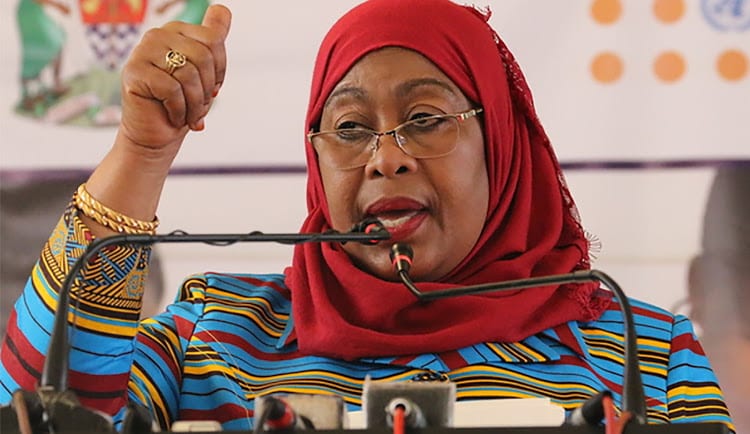
President Samia Suluhu Hassan, who won the election with 98 per cent of the vote, has characterised the unrest as premeditated and suggested it was orchestrated by foreign actors.
“The commission has informed us that all the violence was planned, coordinated, financed, and carried out by individuals equipped and trained to commit acts of destruction,” she said after receiving the report.
She added that conflicts within Africa are often instigated by external forces seeking “to continue plundering resources.”
The opposition swiftly rejected the findings.
“It’s a cover-up. Like many previous statements by the president, this report is designed to whitewash the regime’s crimes,” said John Kitoka, head of foreign affairs for the Chadema opposition party.
Ado Shaibu, a member of parliament for the ACT-Wazalendo opposition party, criticised the report’s lack of transparency.
“Crucial information that should have been made public has been omitted. We therefore maintain our position of not recognising the Chande Commission or its report,” he said.
Shaibu added that families of victims had hoped the commission would deliver justice.
The report nonetheless marks the first official acknowledgment of the scale of the unrest.
Mohamed Chande Othman, who led the commission, said the figure of 518 deaths was “not final or conclusive.”
He dismissed independent claims of mass graves and the removal of bodies from hospital mortuaries, saying such allegations “could not be substantiated.”
While the report confirmed that 2,390 people were injured—including 120 police officers—it did not assign responsibility for the violence.
Othman also said that while some images circulating online were genuine, others had been manipulated using artificial intelligence.
He further claimed that some missing persons cases involved individuals who had “disappeared for personal reasons” or staged their own abductions.
Foreign journalists were barred from entering the country to cover the elections, and an internet blackout during and after the vote made it difficult to assess the true scale of the violence.
The crackdown drew rare criticism from regional observers, with the African Union stating that the election failed to meet “standards for democratic elections.”